For the first time since 2009 I crossed the Bay of Biscay more than once during 2025.
With my children getting a little older, I made the decision to try and do some more surveys and guiding for the marine charity ORCA, the same one I worked for in 2009 as the Wildlife Officer on board the Brittany Ferries Pont Aven.
My first trip was in July when I helped guide on a new Sea Safari route between Portsmouth and Santander, on a new ferry for me the Santona. We left Portsmouth in the evening and so were just north of the French islands off Bretagne when we awoke at first light the following morning. Here we encountered many dolphins and seabirds, including one particularly exuberant bottlenose dolphin that kept repeatedly breaching clear of the water parallel to the ship. We spent the rest of the day trundling along heading for the continental slope and the deeper waters of the Bay. The timings didn’t quite work out for us and it was dark by the time we hit that drop where then seabed plunges over 2000 m and more. The next morning it was just about dawn as we were heading into the entrance to the long harbour at Santander. Heading back out later that day and despite the white caps and waves we picked up a big group of common dolphins. But the Bay was ominously quiet and there was not a blow of a whale to be seen… The next morning, waking up early again I was ‘greeted’ by a morning pass by a minke whale. The fog then descended and we spent the entire day heading up the English Channel and unable to see more than 200 m in any direction!
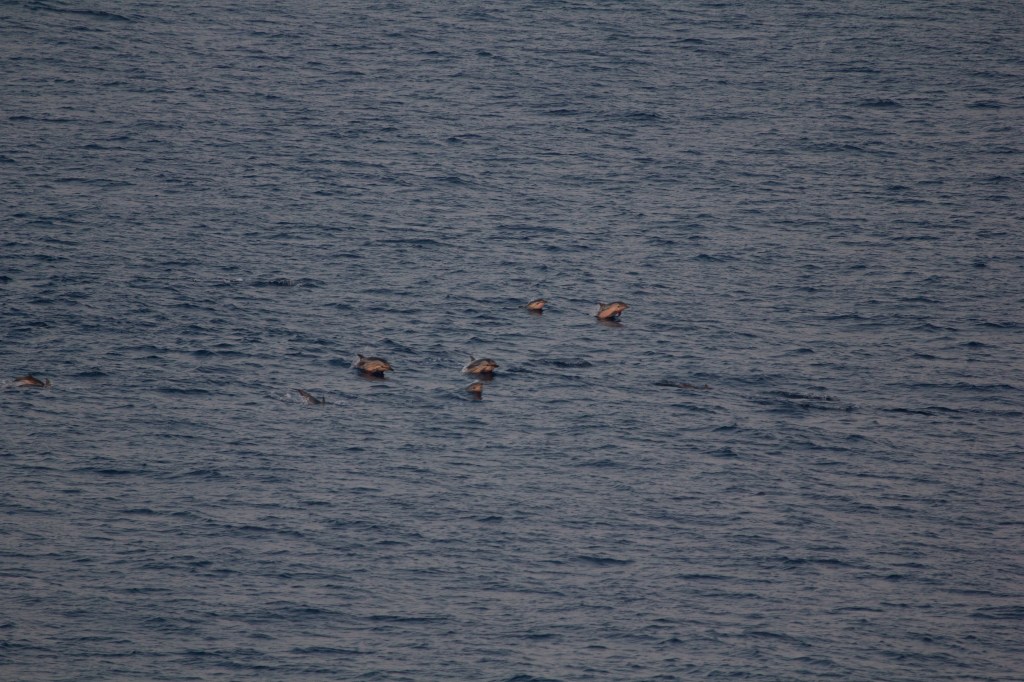
My second trip was back on the Pont Aven, sailing once again between Plymouth and Santander. Another Sea Safari and a special one for me as my family joined me on the trip. Leaving and returning to Plymouth and the English Channel was busy, almost boiling in places with massive bait balls of small fish being feasted on by tuna, common dolphins, minke whales. And here, almost a stones throw from the Cornish coast, the distinctive tall blows of fin whales. There were Risso’s dolphin and a sighting of long-finned pilot whales too. It was all kicking off. But the Bay, once again was super quiet. There were common dolphins and striped dolphins, plus a sighting of a beaked whale, but those giants the fin whale were again conspicuous in their absence.
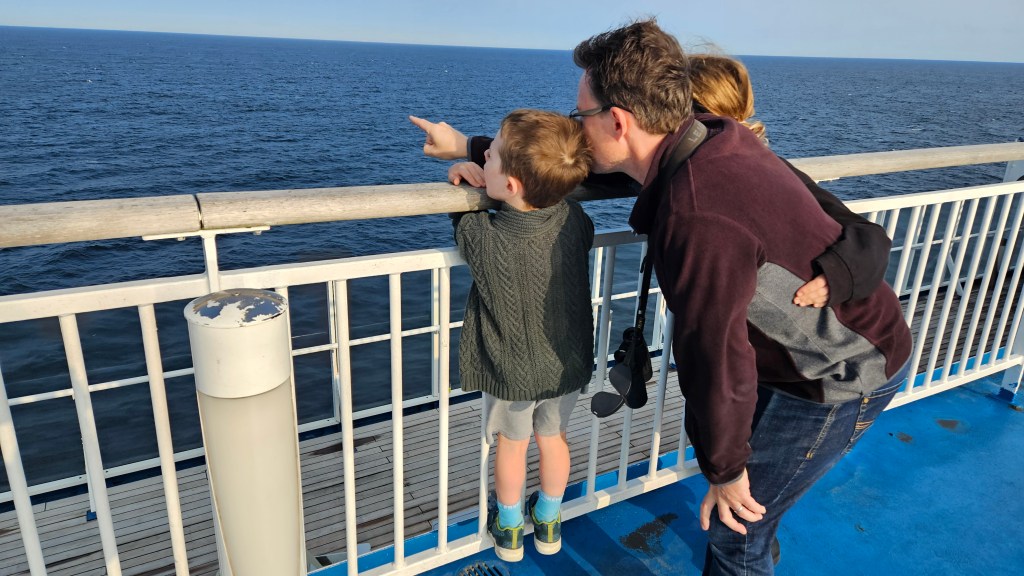
My final trip across the Bay in 2025 was in October. The nights were drawing in, and there was less time to survey, but it didn’t stop us from again observing huge bait balls of fish in the Channel, with tuna, common dolphins and minke whales. But once again there were no large whales in the Bay itself. We had travelled all the way down to Santander and back, were approaching the harbour entrance at Plymouth, had literally turned to each other to say 5 more minutes surveying and we’ll call it, I turned my head and whoosh a large blow on the horizon caught my eye. In the words of the Pont Aven’s Captain, we had travelled to Spain and back and see a whale right at the end on our doorstep.
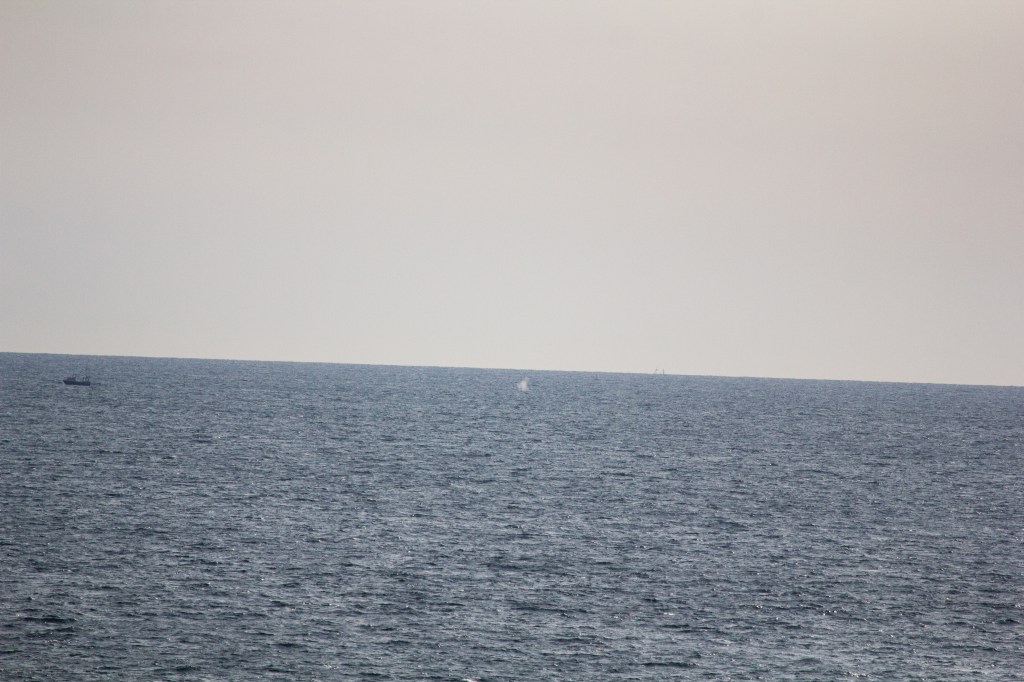
But this was the way of the Bay in 2025. Of all the bridge surveys, Sea Safaris and Ocean Conservationists sailing to and fro over its waters this summer, there had only been a handful of sightings of fin whales in the Bay itself, during a time when there should be hundreds. So where were they?
Well we know some of them were hanging around off Plymouth and the English Channel, with ORCA surveys and local whale watchers seeing them regularly throughout the summer, along with large numbers of common dolphin, tuna and Risso’s dolphin, and it is likely they had all followed the food.
We could see it with our own eyes. The boiling bait balls of fish, the tuna, dolphins and minke whales, all in the Channel in large numbers, and at least five fin whales. Local reports were of the same, large numbers of squid, jellyfish, dolphins, regular sightings of fin whales, all just off the Cornish coast. But where were the rest of the whales? Its not like there were huge numbers being sighted further north off the Irish and Scottish coasts… so where were they?
The simple answer is likely that they have followed the food, and the food as moved elsewhere. But that simple answer only raises more questions, like where has the food moved to? We know waters have warmed and the previous year saw incredibly warm waters in the Mediterranean and areas further south, which may well have had an influence on distribution and spawning. Is it a lag response to that? Is it a permanent change? Where else have the whales moved to? What impact is that going to have on populations? At this point we don’t know, and we may spend a long time trying to figure out the answers, but one thing for sure is that surveys across the Bay of Biscay will continue to provide key long-term data sets to answer some of these questions. Who knows what 2026 will bring…
 Wild Barley